What are we doing?
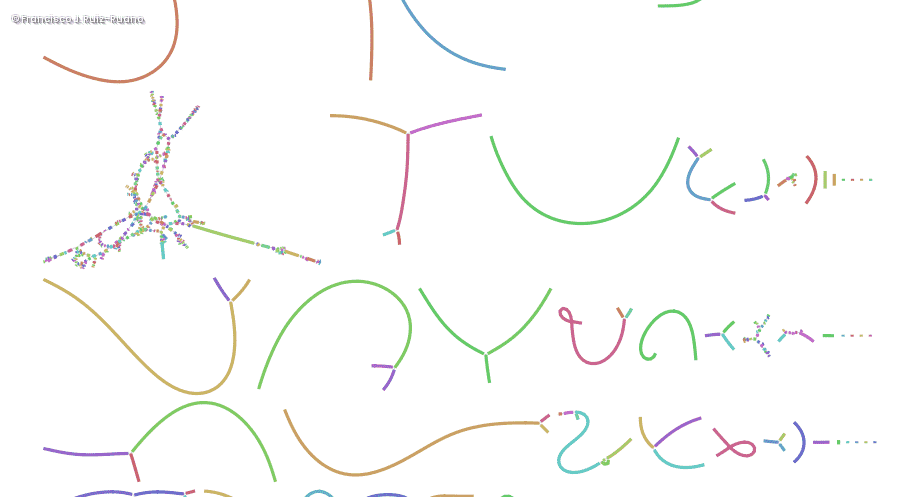
We study animal biodiversity from a molecular perspective, particularly in the context of the diversity of molecules in each cell. Each genome is an ecosystem of molecules with diverse parasitic, mutualistic and symbiotic interactions with each other. We study genetic conflicts between molecular parasites such as transposable elements, viruses and B chromosomes, and how these affect host genome structure and, through effects on reproductive isolation, biodiversity change. Only by understanding the depths of the unknown genetic diversity can the unknown biodiversity be better understood.
How do we do that?
Although much of our ongoing research focuses on the unknown genetic diversity of birds, particularly in the form of differences between germline and soma genomes, our research is not taxon-centred but concept-centred. Our past and ongoing projects have also focussed on crocodilians, turtles, bony fishes, insects, crustaceans, tardigrades, roundworms, arthropods and fungi.
Our research combines methods and concepts of evolutionary genomics, molecular biology, developmental biology, molecular cytogenetics and functional genomics. We also apply taxonomic principles to the characterisation of transposable elements and viruses.
Who are we?
Our team is interdisciplinary and multicultural with members from currently 8 nations, as well as actively involved in various national and international research networks. Our current research is funded by the European Research Council (ERC Consolidator Grant "GermlineChrom"), the Leibniz Association (Leibniz-Lab Pandemic Preparedness), the Leibniz Institute for the Analysis of Biodiversity Change and the University of Bonn.
Contact person

- Head of Centre for Molecular Biodiversity Research (zmb)
- Head of Section Molecular Biodiversity
Phone: +49 228 9122 289
E-Mail: a.suh@leibniz-lib.de
Projects
BIGFOOT - BIodiversity decline's Genomic FOOTprint
Management: Dr. habil. Astrid Böhne, Dr Eckart Stolle
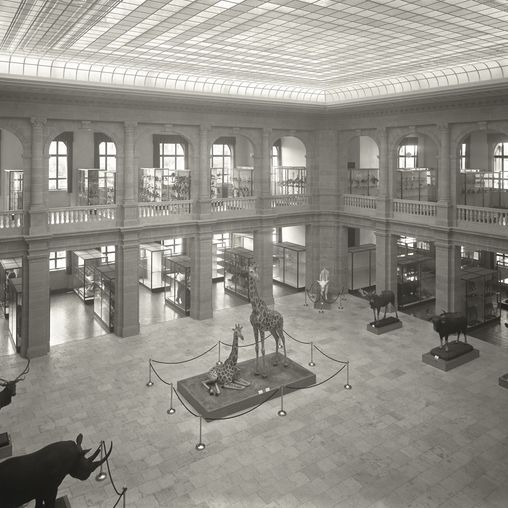
Provenance research at the Museum Koenig
Management: Dr André Koch
Publications
| of
2026/09
Palaeoproteomic Deconvolution of Physical and Genetic Collagen Mixtures
Advanced Science
2026/09
Optimised light sources reduce nocturnal insect attraction at railway stations
Biological conservation, 321
2026/09
Management of wetlands in mining sites conserves habitat for threatened amphibians
Journal for Nature Conservation, 93
2026/06
Anteil dunkelgrau gefärbter Kreuzottern von 2010–2024 in einem Moor in Nordwestdeutschland. Feldherpetologisches Magazin
Feldherpetologisches Magazin, 23
2026/06
Maßnahme 61: Forschung für mehr Naturschutz. „Insektenschutz an Bahnhöfen durch insektenfreundliche Beleuchtung“ (BALIN)
2026/05
Monitoring Technologies in Farmland Biodiversity
2026/05
Measuring what matters: operationalising biodiversity indicators for results-based CAP monitoring
Ecological indicators, 186
2026/04
Monitoring technologies in farmland biodiversity: Outlook from BioMonitor4CAP project
2026/04
Insecticide‐level pest control provided by in‐field flower strips
Journal of applied ecology, 4, 63
2026/04
Combining Time-Stamped Insect Sampling With eDNA-Metabarcoding of Guano to Reconstruct Community Interactions
Ecology and Evolution, 4, 16
2026/03
Pesticides but not microplastics affect pollination in rape seed production in China
Environmental Research Food Systems, 1, 3
2026/02
Insect declines: Challenges and solutions
Current Opinion in Insect Science
2026/01
Optimised light sources reduce nocturnal insect attraction at railway stations
2026/01
Global evidence that plant diversity suppresses pests and promotes plant performance and crop production
Nature Ecology & Evolution
2026/01
Mountains of diversity: a systematic revision of the Andean rodent genus Oreoryzomys (Cricetidae: Sigmodontinae)
PeerJ, 14
2025/12
Wooden or metal: live-trap type preferences of small mammals in relation to habitat, taxon, and sex
Mammalian Biology
2025/12
Revisiting the taxonomy and biogeography of the largest sigmodontine rodent (Rodentia, Cricetidae) through ancient DNA
Zoological journal of the Linnean Society, 4, 205
2025/12
Lack of spatial coordinate information for an important insect order (Lepidoptera) in a Central European country
Ecosphere, 12, 16
2025/09
Edge computer vision produces microarthropod-based high-throughput biodiversity metrics
2025/09
Edge computer vision produces microarthropod-based high-throughput biodiversity metrics
bioRxiv
2025/03
Reduzierter Einsatz von Pflanzenschutzmitteln in der Agrarlandschaft: Strategien aus Sicht der Biodiversitätsforschung
2025/01
BioMonitor4CAP - Deliverable D2.1 - Methods and indicators ready for validation/demonstration
2024/10
Entwicklung eines nichtletalen Monitoringsystems zur Erfassung von Insektenbiodiversität in landwirtschaftlichen Produktionssystemen
2024/06
Lichtblick für die Biodiversität: Insektenfreundliche Beleuchtung von Bahnhöfen. In: Jahresbericht 2024 Deutsches Zentrum für Schienenverkehrsforschung beim Eisenbahn-Bundesamt. 2024, S.27-28
2017/08
Can quartet analyses combining maximum likelihood estimation and Hennigian logic overcome long branch attraction in phylogenomic sequence data?
PloS one, 8, 12
2016/08
Plesiomorphic character states cause systematic errors in molecular phylogenetic analyses: a simulation study
Cladistics, 4, 32
2026
2025
2024
2017
2016
Employees

Dr Marilou Boddé
zmb Molecular biodiversity ScientistPhone: +49 228 9122 401
E-mail: m.bodde@leibniz-lib.de
Ines Borges
zmb Molecular biodiversity Doctoral candidatePhone: +49 228 9122 368
E-mail: i.borges@leibniz-lib.de
MSc Nina Casillas
zmb Molecular biodiversity Doctoral candidatePhone: +49 228 9122 379
E-mail: n.casillas@leibniz-lib.de
Diana Gonzalez
zmb Molecular biodiversity Doctoral candidatePhone: +49 228 9122 349
E-mail: d.gonzalez@leibniz-lib.de
Dr Yifan Pei
zmb Molecular biodiversity Postdoctoral researcherPhone: +49 228 9122 242
E-mail: y.pei@leibniz-lib.de
Dr Francisco Jesus Ruiz-Ruano Campana
zmb Molecular biodiversity Postdoctoral researcherPhone: +49 228 9122 427
E-mail: f.ruizruano@leibniz-lib.de
Prof Dr Alexander Suh
zmb Molecular biodiversity ScientistPhone: +49 228 9122 289
E-mail: a.suh@leibniz-lib.deAnna Torgasheva
zmb Molecular biodiversity ScientistPhone: +49 228 9122 370
E-mail: A.Torgasheva@leibniz-lib.de
Dr Niki Vontzou
zmb Molecular biodiversity Postdoctoral researcherPhone: +49 228 9122 389
E-mail: n.vontzou@leibniz-lib.de