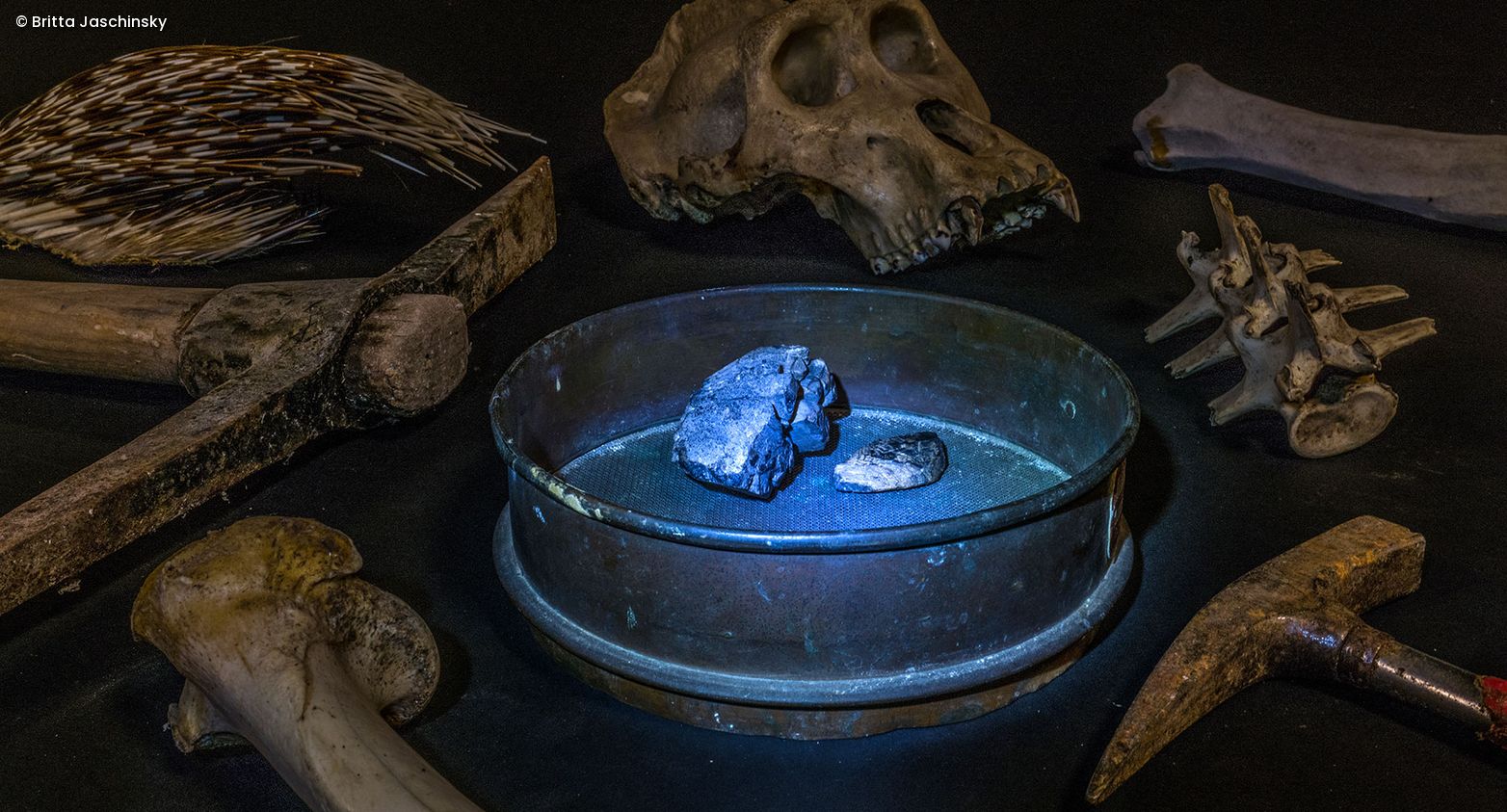
The relationship between humans and nature
The biocultural collection brings together over 43,000 zoological and botanical specimens, tools and everyday objects from various periods and communities, as well as written documents. These reflect the relationships between different cultural communities, both past and present. This collection offers insights into the cultural memory of societies, biodiversity and ethical collecting practices. The objects are used for interdisciplinary research as well as for youth and adult education. With this approach, the LIB plays a pioneering role within the German-speaking museum world.
Objects through the ages
The material comes predominantly from school collections in Hamburg, which have been wound up over the past 20 years, as well as from private donations and seizures by customs. Through the way they have been prepared, the objects reveal insights into the use of different animal groups, social values and role models, knowledge and perception. Depending on the cultural background, one and the same animal species may be regarded as a god, a source of food, a loyal companion or a despised creature.
Dealing with endangered species
Protected animal species are frequently killed for traditional Chinese medicine preparations, hunting trophies, fashion items made from leather, fur or ivory, or other materials for everyday use. The items in the collection provide insight into these uses and help to inform measures for the protection of endangered species.
Components of the Biocultural Collections
The museum’s educational collection is used as visual aids during guided tours and for educational programmes at the museum. It offers invaluable opportunities, particularly as a direct, sensory experience that promotes the long-term effectiveness of learning processes.
The species conservation collection comprises products seized by customs and heavily processed items such as handbags, furs from protected animal species, ivory objects and products used in traditional Chinese medicine. These products are used in identification exercises with customs staff and at other events relating to species conservation.
This collection of themes showcases items used in the exhibition’s displays, such as souvenirs from the whaling ship Olympic Challenger, photographs and art objects.
The library contains literature on the exhibition’s themes, species conservation and the relationship between humans and nature, as well as specialist journals and identification guides.
The collection of specimens includes working models, death masks and moulds, some of which are historical items from the former Hamburg Natural History Museum dating from before 1943.
The model collection comprises specimens such as models and small sculptures, as well as replicas, including reproductions and casts of animals, alongside biology models from school and university collections, and sources relating to the educational materials trade in Germany in the 19th and 20th centuries.
Contact person
