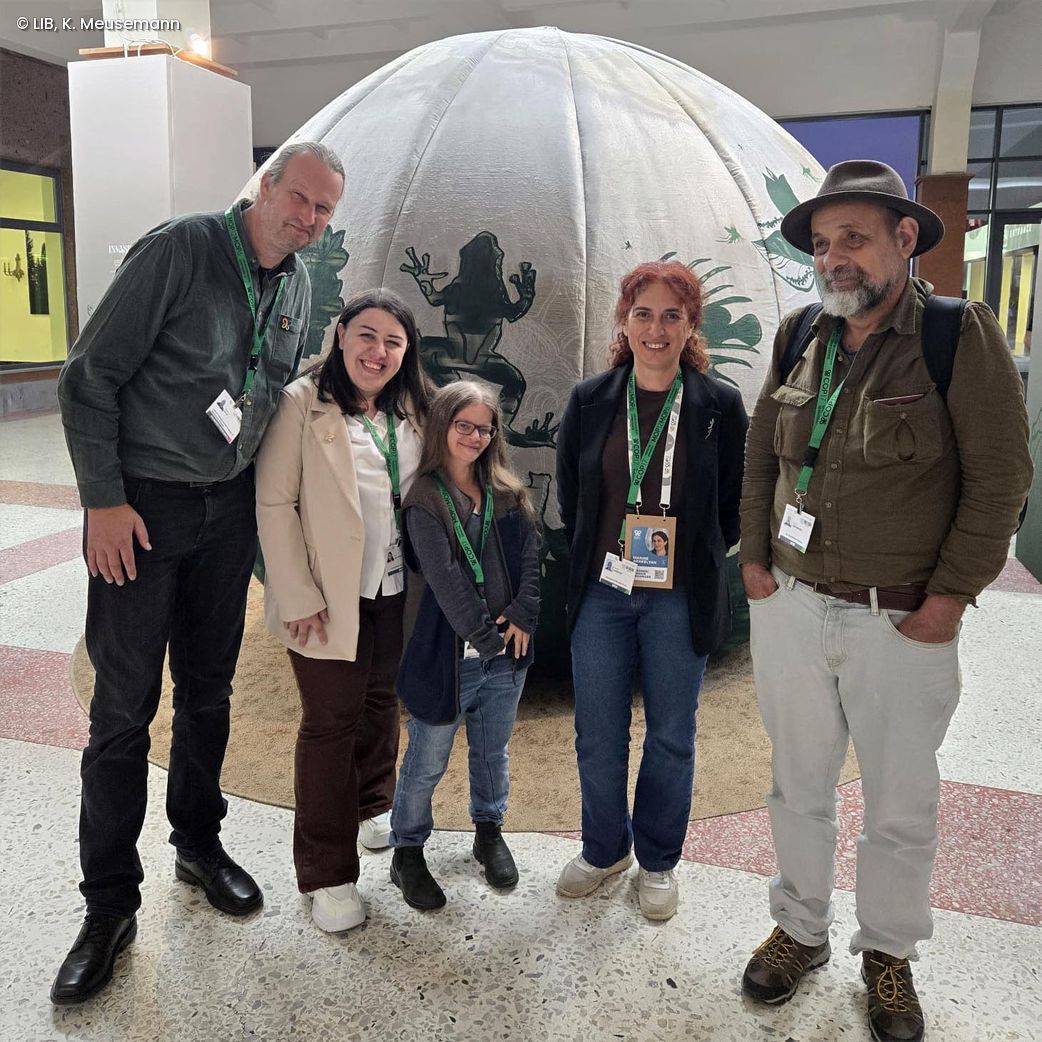
The UN Biodiversity Conference, COP17, in Yerevan has come to an end. With the so-called Yerevan Pathway, the contracting parties have agreed on a joint roadmap to accelerate the implementation of the global biodiversity agreement. However, the first global assessment shows that efforts to date are not sufficient to achieve the biodiversity targets by 2030.
Following negotiations that were at times difficult, the states agreed on just under 50 resolutions. Among other things, these are intended to drive forward the phasing out of subsidies harmful to biodiversity and to improve the monitoring of progress in biodiversity conservation. In addition, new funding commitments and initiatives from public and private donors totalling just under two billion US dollars were announced at the conference. A key step forward is the strengthening of the participation of indigenous peoples and local communities: the contracting parties agreed on the rules of procedure for a permanent body, the establishment of which had already been decided, and which is intended to give them a greater say in future international decisions on the protection of biological diversity.
However, important questions remain unanswered regarding the long-term financing of biodiversity conservation. Whilst the states agreed on criteria for a future financing mechanism, the details of its design were deferred to the next conference. The aim is to mobilise at least 200 billion US dollars annually for biodiversity conservation by 2030. On the other hand, concrete progress was made on monitoring: a new expert panel is to support the implementation of the international monitoring framework and thus help to better assess the effectiveness of conservation measures.
With regard to the causes of biodiversity loss, Prof Dr Christoph Scherber, Deputy Director-General of the LIB at the Bonn site, believes there is still a considerable need for action. Speaking to the Science Media Centre at the end of the conference, he said: “However, the actual drivers of biodiversity change – primarily land use, overexploitation of resources and climate change – remain in place, meaning it is likely to be almost impossible to achieve the targets by 2030.”
The LIB was accredited as an observer organisation at COP17 and was represented there by Dr Karen Meusemann and Björn Rulik. One key issue the pair followed at the conference was the handling of digital sequence information (DSI). Among other things, this involved the further development of international benefit-sharing arrangements for the use of genetic data. In addition to financial contributions, non-monetary contributions such as knowledge transfer and the development of scientific capacity also play a role in this context.
“Open genetic data is indispensable for international biodiversity research. At the same time, the benefits derived from its use must be distributed fairly and, in particular, must also benefit countries rich in biodiversity. To achieve this, we need fair and workable solutions that facilitate scientific collaboration,” emphasises LIB researcher Björn Rulik.
Even in the run-up to COP17, the LIB, together with four other research institutions, had called for decisive action to protect biodiversity.
“COP17 has once again highlighted just how wide the gap is between international biodiversity targets and their actual implementation. To bridge this gap, we need reliable funding, scientifically sound biodiversity monitoring, open access to research data and strong international research networks. Political commitments must now be translated into concrete action,” emphasises LIB Director-General Prof Dr Dr Bernhard Misof.
Strengthening scientific collaboration
Alongside the discussions and events focusing on the significance of natural history collections, the future of citizen science, the role of the bioeconomy and the interface between science and politics, Karen Meusemann and Björn Rulik placed particular emphasis on international networking. They exchanged views with experts from research institutions and government bodies such as Senckenberg, ZALF, the Federal Agency for Nature Conservation (BfN) and Naturalis, as well as with long-standing research partners from the Caucasus.
Among others, they met Prof. David Tarkhnishvili from Ilia State University in Georgia, as well as Prof. Marine Arakelyan and Dr Meri Arzumanyan from Yerevan State University. The LIB has a long-standing collaboration with both institutions, including through the Caucasus Barcode of Life (CaBOL) project and as part of the Erasmus exchange programme. Together, the partners are researching the biological diversity of the Caucasus – one of the world’s recognised biodiversity hotspots, where species diversity remains largely under-researched in many areas.
In addition to the technical discussions, the LIB delegates were also concerned with the public perception of the conference:
“My impression is that COP17 received very little attention in the German media, considerably less than two years ago. We – including the media – must finally start to take biodiversity into account in public discourse and politics: we are part of nature. Antonio Guterres summed it up in the foreword to the Global Report 2026, State of Biodiversity Action: ‘Safeguarding biological diversity is essential to the health of our planet, the resilience of our economies, and the well-being of all people’. Nothing less. As scientific institutions, we must do even more – even though we are already working intensively on this, for example through projects such as FörTax – to make the importance of biodiversity, its crisis and ‘nature-positive solutions’ more visible and tangible. So that we can move from talk to action,” says Karen Meusemann.
A look ahead to COP18 in Ecuador
The next biodiversity conference will take place in Ecuador in 2028. The LIB has also been actively involved in international research collaborations there for many years, including with the Instituto Nacional de Biodiversidad (INABIO) and the Universidad San Francisco de Quito (USFQ). Since 2019, LIB researchers have also been organising annual two-week field trips to Ecuador’s cloud and lowland rainforests for biology students from the University of Bonn. Together with the Pontificia Universidad Católica del Ecuador (PUCE), the LIB is also establishing the Ecuadorian-German Integrative Biodiversity Research Centre (EGiB) in Quito. The centre aims to strengthen biodiversity research and build local scientific capacity.
There are two years to go until COP18 to implement the Yerevan decisions and make measurable progress in conserving and protecting biodiversity, as well as in restoring damaged ecosystems. The targets are achievable – but time is running out.
Find out more: Our magazine article ‘Global research, local action’ explains how the LIB is working with research partners in Ecuador and Madagascar to strengthen biodiversity research.


Scientific LIB contact

Press Contact (LIB Hamburg)
